

New national compendium showcases how cities and universities are rethinking innovation for inclusive growth
Unique i-PLACE platform brings together ideas from across the UK to shape the future of place-based innovation
A new national compendium published today brings together leading thinkers and practitioners from across the UK to explore how cities and regions can develop more inclusive, resilient and locally grounded approaches to innovation.
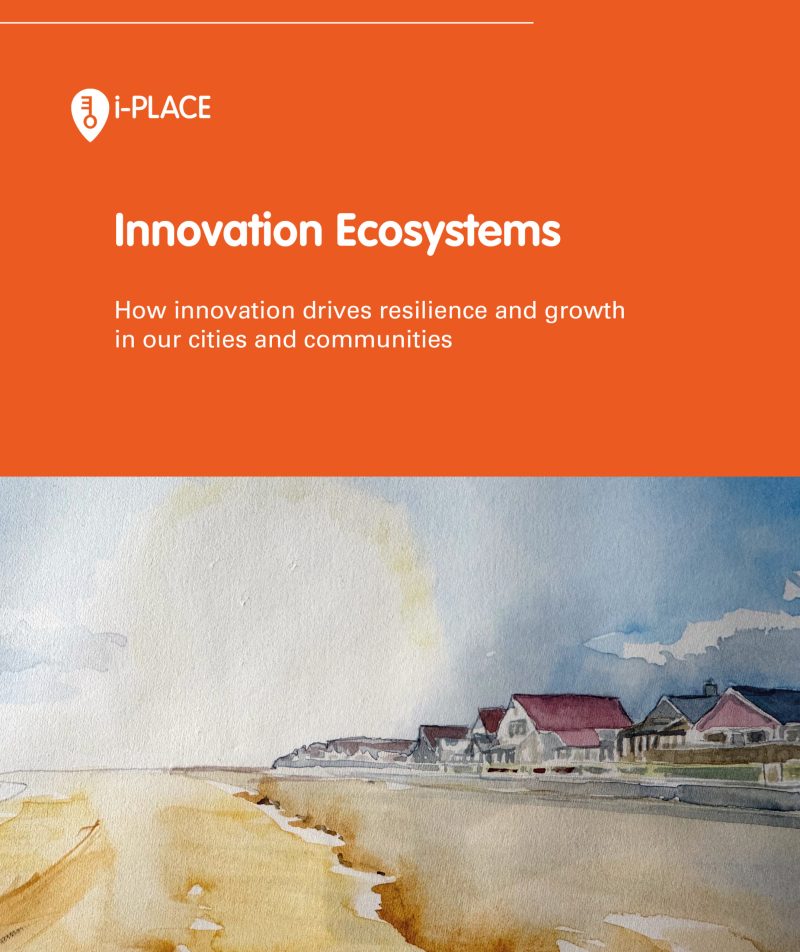
Innovation Ecosystems, the first i-PLACE Compendium, is published by the Key Cities Innovation Network (KCIN) and features ten peer-reviewed contributions from universities and civic partners working across the country. Together, the collection draws on collaboration between 12 universities and 22 cities, offering new insights into how place-based innovation can address some of the UK’s most pressing challenges—from spatial inequality and productivity to skills, climate transition and community resilience.
Spanning locations from Glasgow to Plymouth, and from Morecambe Bay to the West Midlands, the collection reflects the diversity of places across the UK and the different ways in which innovation is being developed in practice. The contributions range from culture-led regeneration in coastal communities, to new models of university collaboration, to approaches that place lived experience, civic identity and local enterprise at the heart of innovation systems.
What distinguishes the Compendium is its grounding in real places and partnerships. Each contribution draws on active collaboration between universities, local government, industry and communities, demonstrating how innovation ecosystems can be shaped by the specific strengths, challenges and ambitions of different regions.
The Compendium sits within i-PLACE, a new open platform developed by KCIN to connect research, policy and practice in place-based innovation. Through annual publications, conferences and ongoing collaboration, i-PLACE provides a space for cities, universities, industry and communities to share ideas, test approaches and scale impact.
By bringing together insights from across multiple regions in a single platform, i-PLACE aims to bridge the gap between local innovation and national policy—ensuring that learning from places informs wider debates about economic development, public policy and the future of the UK’s innovation system.
The full list of contributions to Innovation Ecosystems includes:
- The role of felt experience in place-based innovation (Glasgow / AHRC Place Programme): Reframing policy around people’s lived and emotional relationship with place
- Bath city-region as a hologrammatic creative canvas (Bath): Using creative infrastructure to drive inclusive regional growth
- Plymouth Sound National Marine Park as a model for place-based innovation (Plymouth): Harnessing natural assets for regeneration and innovation
- Mezzo-level: imagination as policy infrastructure (Essex): Embedding imagination within policy systems to enable place-based change
- Innovation “from the outside in” – rethinking regional ecosystems (Salford): Reconfiguring how regions engage with external networks and ideas
- From football city to civic lab: stewarding innovation (Wrexham): Building civic identity as a driver of innovation
- Innovator-driven enterprise: an approach to regional ecosystems (Bradford): Supporting entrepreneur-led regional growth
- Unlocking shared commercialisation pathways (West Midlands): Strengthening collaboration in university innovation
- Reaching further: integrating FE Colleges (Greater Manchester): Expanding participation in innovation ecosystems
- Landing a Morecambe Bay culture innovation ecosystem (Morecambe Bay): Developing culture-led regional innovation
Professor Christopher Smith, Executive Chair of UKRI Arts & Humanities Research Council, commented:
“Innovation, with its profound potential to address societal challenges and foster prosperity, grows from specific local contexts and practice. Innovation Ecosystems outlines the many different ways in which this process can occur, and offers a range of valuable lessons for how we can catalyse place-based innovation across the UK.”
Cllr John Merry CBE, Chair of Key Cities and Deputy City Mayor of Salford, said:
“The ideas presented in this compendium are both important and exciting. They show how our cities, working with their universities and partners, can develop innovative approaches that are rooted in local experience but have national relevance.”
Professor Nic Beech, Vice-Chancellor of the University of Salford and co-editor of the Compendium, added:
“What distinguishes these contributions is their grounding in place. Each reflects real partnerships, real challenges and real opportunities—demonstrating how innovation ecosystems can be developed in ways that are both locally meaningful and scalable across the UK.”